

How we are structured
The Bank is managed by a Board of Governors, a Board of Directors, the President, the Vice Presidents and the Secretary General. The President is the Chairman of the Board of Directors and the Bank’s chief executive. The President conducts the current business of the Bank, under the direction of the Board of Directors. The Vice Presidents and the Secretary General are appointed by the Board of Directors, conduct their activity under the delegated authority from the Board of Directors and report to the President.
The Bank’s President, the Vice Presidents, the Secretary General and the Members of the Board of Directors should be considered/treated as persons who are or who have been entrusted with a prominent function by an international organization.
At the heart of the Bank’s success are its employees, whose expertise, dedication, and commitment are essential in fulfilling the Bank’s mission.
Board of Governors
The Board of Governors is the highest decision-making body of the Bank. It is comprised by one Governor and one Alternate Governor appointed from the 11 Member States of the Bank. Each Governor and each Alternate Governor shall serve at the pleasure of the appointing Member. The Board of Governors may delegate to the Board of Directors any or all of its powers, except the power to, among other things, amend the Agreement Establishing the Bank, approve the admission of new Members, authorize any changes in the Bank’s capital stock and terminate the operations of the Bank. The Board of Governors approves the annual report, the audited financial statements and appoints the President of the Bank. At its annual meeting, the Board shall elect one of the Governors as Chairman, who shall hold office until the election of the next Chairman at the next annual meeting of the Board. The Chairmanship rotates amongst the Member States

| Country | Governor | Alternate Governor |
|---|---|---|
|
Albania
|
Mr. Endrit YZEIRAJ
Deputy Minister of Finance
|
Ms. Kesjana HALILI
General Director of State Debt, Ministry of Finance
|
|
Armenia
|
Mr. Arthur JAVADYAN
Ambassador-at-large, Chairman of the Board of the Centre for Economic Perspectives Foundation
|
Mr. Vahan AVETISYAN
Director, Financial Control and Licensing Department, Central Bank of Armenia
|
|
Azerbaijan
|
Mr. Sahil BABAYEV
Minister of Finance
|
Mr. Mikayil JABBAROV
Minister of Economy
|
|
Bulgaria
|
Ms. Lyudmila PETKOVA
Director, Public Financial Inspection Agency (PFIA)
|
Ms. Gergana BEREMSKA
Director, International Financial Institutions and Cooperation Directorate, Ministry of Finance
|
|
Georgia
|
Ms. Natia TURNAVA
Governor, National Bank of Georgia
|
Mr. Lasha KHUTSISHVILI
Minister of Finance
|
|
Greece
|
Mr. Nikos PAPATHANASIS
Alternate Minister of National Economy & Finance
|
Position Vacant
|
|
Moldova
|
Position Vacant
|
Position Vacant
|
|
Romania
|
Mr. Florin-Alexandru ZAHARIA
Secretary of State, Ministry of Finance
|
Ms. Boni Florinela CUCU
General Director, General Directorate for ECOFIN, Financial Assistance and International Financial Relations, Ministry of Finance
|
|
Russia
|
Ms. Ekaterina GUSEVA
Director, Department for International Financial Relations, Ministry of Finance
|
Position Vacant
|
|
Türkiye
|
Mr. Osman ÇELIK
Deputy Minister of Treasury & Finance
|
Position Vacant
|
|
Ukraine
|
Mr. Oleksandr KRAVCHENKO
Minister of Economy and Environment
|
Mr. Volodymyr KUCHYN
Acting Director, International Cooperation Department, National Bank of Ukraine
|
Board of Directors
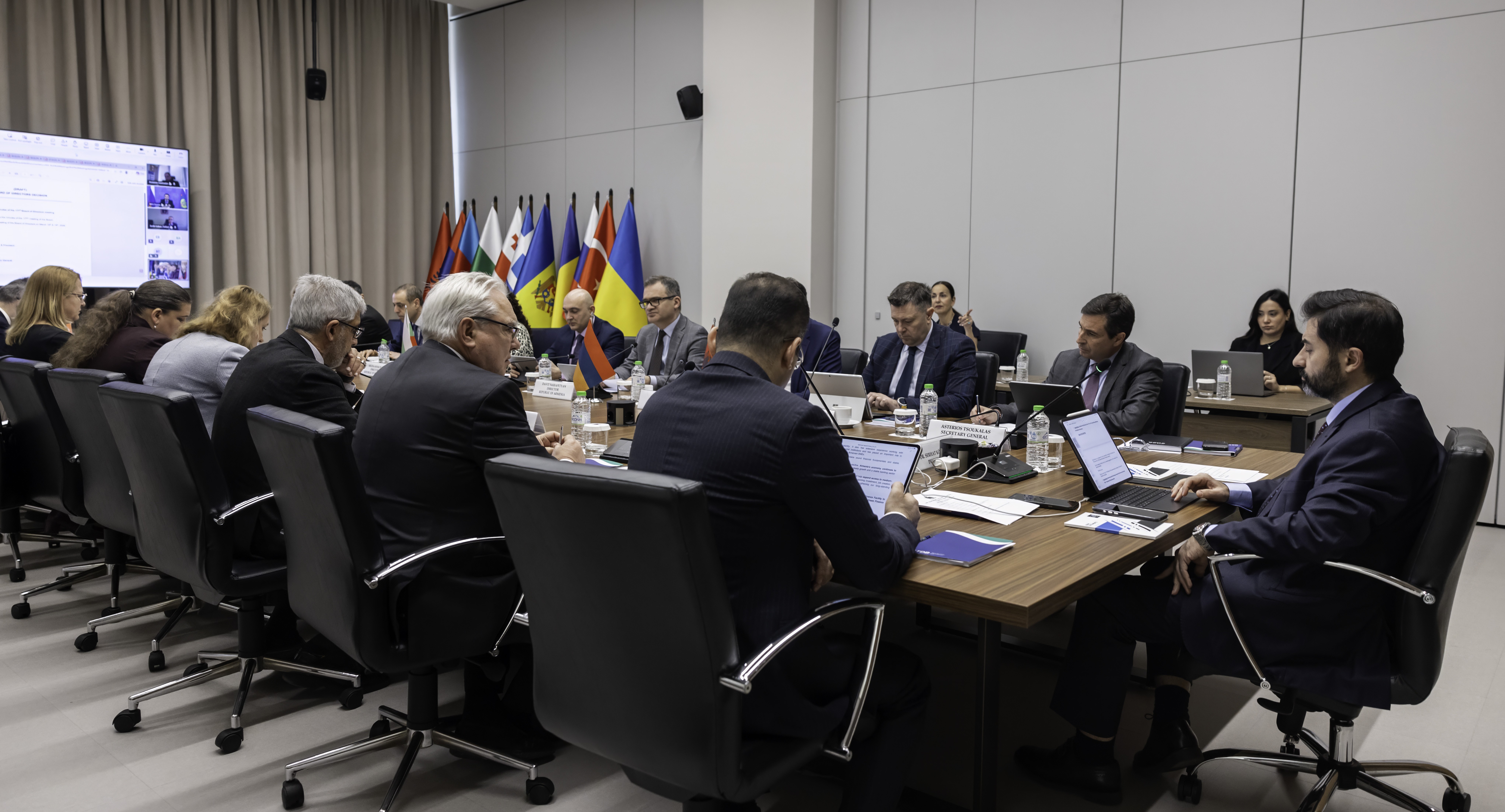
Subject to the Board of Governors' overall authority, the Board of Directors is responsible for the direction of the Bank's general operations.
Under Article 26 the Board of Directors “shall be responsible for the direction of the general operations of the Bank and for this purpose shall, in addition to the powers assigned to it expressly by this Agreement, exercise all the powers delegated to it by the Board of Governors, and in particular take decisions concerning the business of the Bank and its operations in conformity with the general directions of the Board of Governors.”
The Board of Directors is non-resident. Its activity is governed by two documents: (i) “Board of Directors Rules and Procedures”; and (ii) the “By-Laws of BSTDB”, both approved by the Board of Governors.
| Country | Director | Alternate Director |
|---|---|---|
|
Albania
|
Mr. Gentian KËRI
Secretary General, Ministry of Finance
|
Position vacant
|
|
Armenia
|
Mr. Davit NAHAPETYAN
Board Member, Central Bank of Armenia
|
Ms. Milena HOVHANNISYAN
Head, International Cooperation Department, Ministry of Finance
|
|
Azerbaijan
|
Mr. Famil ISMAYILOV
Head, International Cooperation Department, Ministry of Finance
|
Position vacant
|
|
Bulgaria
|
Ms. Milena BOIKOVA
Director, Government Debt Directorate, Ministry of Finance
|
Position vacant
|
|
Georgia
|
Ms. Ekaterine GUNTSADZE
Deputy Minister of Finance
|
Mr. Irakli KATCHARAVA
Head, Public Debt Management Department, Ministry of Finance
|
|
Greece
|
Mr. Christos GEROULANOS
Head, Department of International Financial Institutions & Development Banks, Ministry of Economy & Finance
|
Position vacant
|
|
Moldova
|
Mr. Alexandr RODIDEAL
Head, Public Sector Debt General Directorate, Ministry of Finance
|
Position vacant
|
|
Romania
|
Ms. Diana BLINDU
Head of Division, Management of External Loans, General Directorate for Financial Relations, Ministry of Finance
|
Position vacant
|
|
Russia
|
Mr. Dmitry BIRICHEVSKIY
Director, Department of Economic Cooperation, Ministry of Foreign Affairs
|
Position vacant
|
|
Türkiye
|
Mr. Kerem DÖNMEZ
Director General, Foreign Economic Relations, Ministry of Treasury & Finance
|
Position vacant
|
|
Ukraine
|
Mr. Taras KACHKA
Deputy Prime Minister for European and Euro-Atlantic Integration of Ukraine
|
Position vacant
|
- Board Calendar
- Audit Committee
| Meeting No | Location | Date of Meeting |
|---|---|---|
| 187 Board of Directors Meeting | September 17 & 18, 2026 | |
| 188 Extraordinary Board of Directors Meeting | October 2, 2026 | |
| 189 Extraordinary Board of Directors Meeting | November 5, 2026 | |
| 190 Board of Directors Meeting | December 3, 2026 | |
| 20 Special Board of Governors Meeting | December 4, 2026 |
BSTDB follows best international practices in adopting documents which provide guidance for its main activities. The policy framework adopted by BSTDB is based upon the broad guidelines laid out in its statutory documents, and together with its strategies, form the Bank’s most important directional documents for undertaking initiatives and working in various areas.
The Audit Committee assists the Board of Directors in carrying out its responsibilities with regard to financial and other reporting issues, internal control and compliance with agreements, rules, regulations, policies and codes. It promotes the “control awareness” culture throughout the organization.
According to its Terms of Reference, the Audit Committee reviews the financial statements and general accounting principles of the Bank; ensures that the combined external and internal audits adequately cover the various risk areas; discusses with the External Auditors the scope and content of their work and evaluates their performance.
The work of the Audit Committee is governed by its Rules of Procedures and Terms of Reference:
- Reviews the policy, scope, work programme and reporting relating to the Bank's internal audit and post evaluation
- Oversees the status, ability to perform duties independently and the performance of compliance, internal audit, post evaluation and risk management functions
- Summarizes and channels to the attention of the BoD, suggestions of the members of the management concerning the business and the functioning of the Bank
|
Mr. Taras KACHKA
Director for Ukraine
|
Chairperson
|
|
Mr. Gentian KËRI
Director for the Republic of Albania
|
|
|
Mr. Davit NAHAPETYAN
Director for the Republic of Armenia
|
|
|
Ms. Ekaterine GUNTSADZE
Director for Georgia
|
|
President
The President is the Chief Executive Officer and Chairman of the Board of Directors. As stated in Article 29 of the Agreement Establishing the Bank, the President shall conduct, under the direction of the Board of Directors, the current business of the Bank.
He is appointed by and accountable to the Board of Governors, and reports to the Board of Directors.
The President’s functions can be defined more specifically as follows:
- Ensuring compliance with the Agreement Establishing the Bank and policies approved by the Board of Governors and the Board of Directors
- Chairing the Board of Directors and recommending policies and operational and financial proposals, created in accordance with the Bank’s internal institutional order
- Conducting, as the Chief Executive, the current business of the Bank under the direction of the Board of Directors
- Being responsible for the organization, appointment and dismissal of officers and staff, under the provisions of Articles 29 and 30 of the Agreement Establishing the Bank and the decision of the Inaugural Meeting of the Board of Governors, related to the Secretary General
- Directing the creation, promotion and review of the Bank’s overall institutional development
- Promoting the Bank’s image within the international financial community
- Exercising the authorities related to the Bank’s activities
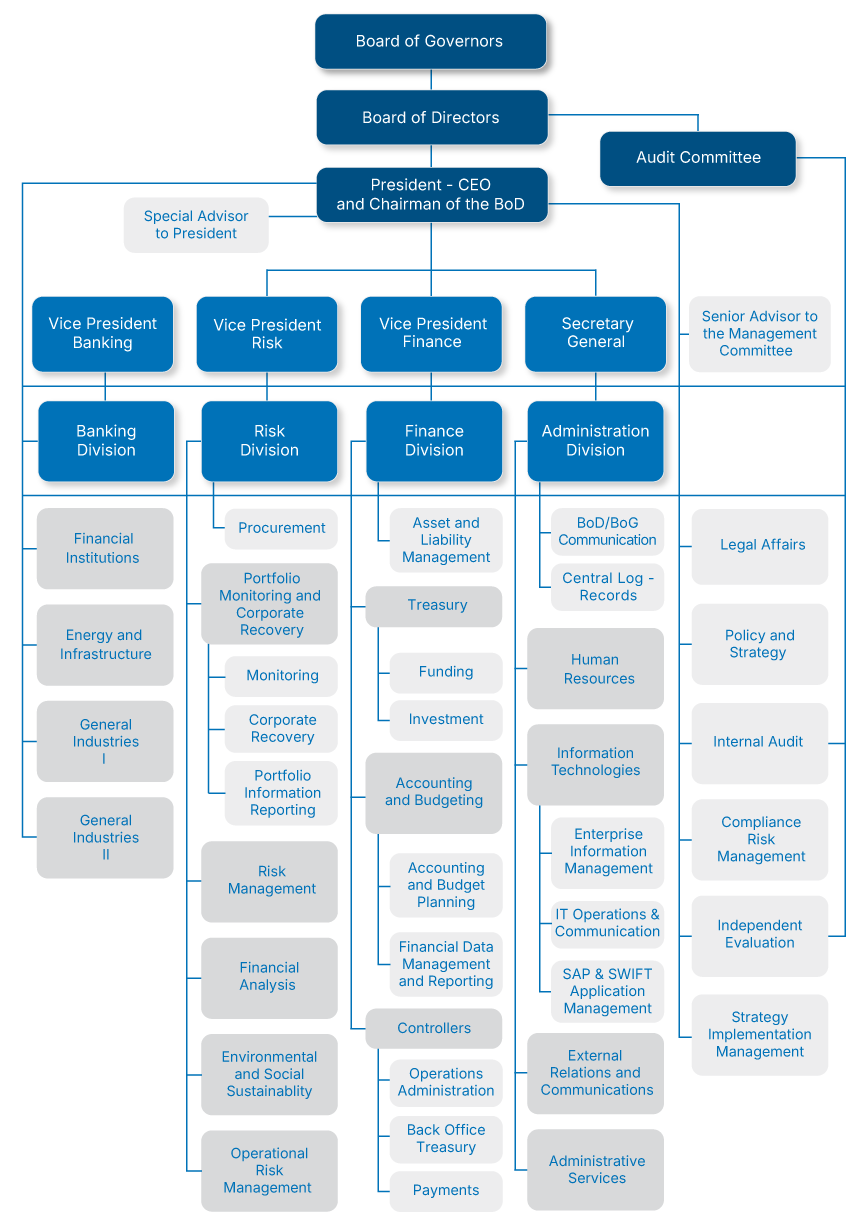
- Overseeing the functional divisions of the Bank (currently Banking, Finance, Risk and Administration Divisions), following the hierarchical line of command as delineated in the Organizational Chart of the Bank and the delegated authority to Vice-Presidents and Secretary General, who act as supervising Heads of Division
- Issuing administrative orders regarding the internal functioning of the Bank
- Approving within the given budget limits joint proposals of Divisions for transfers of funds in the framework of a specific budget line
- Exercising administrative authority over the departments reporting directly to the President’s Office, including the allocation of the divisional budget among them.
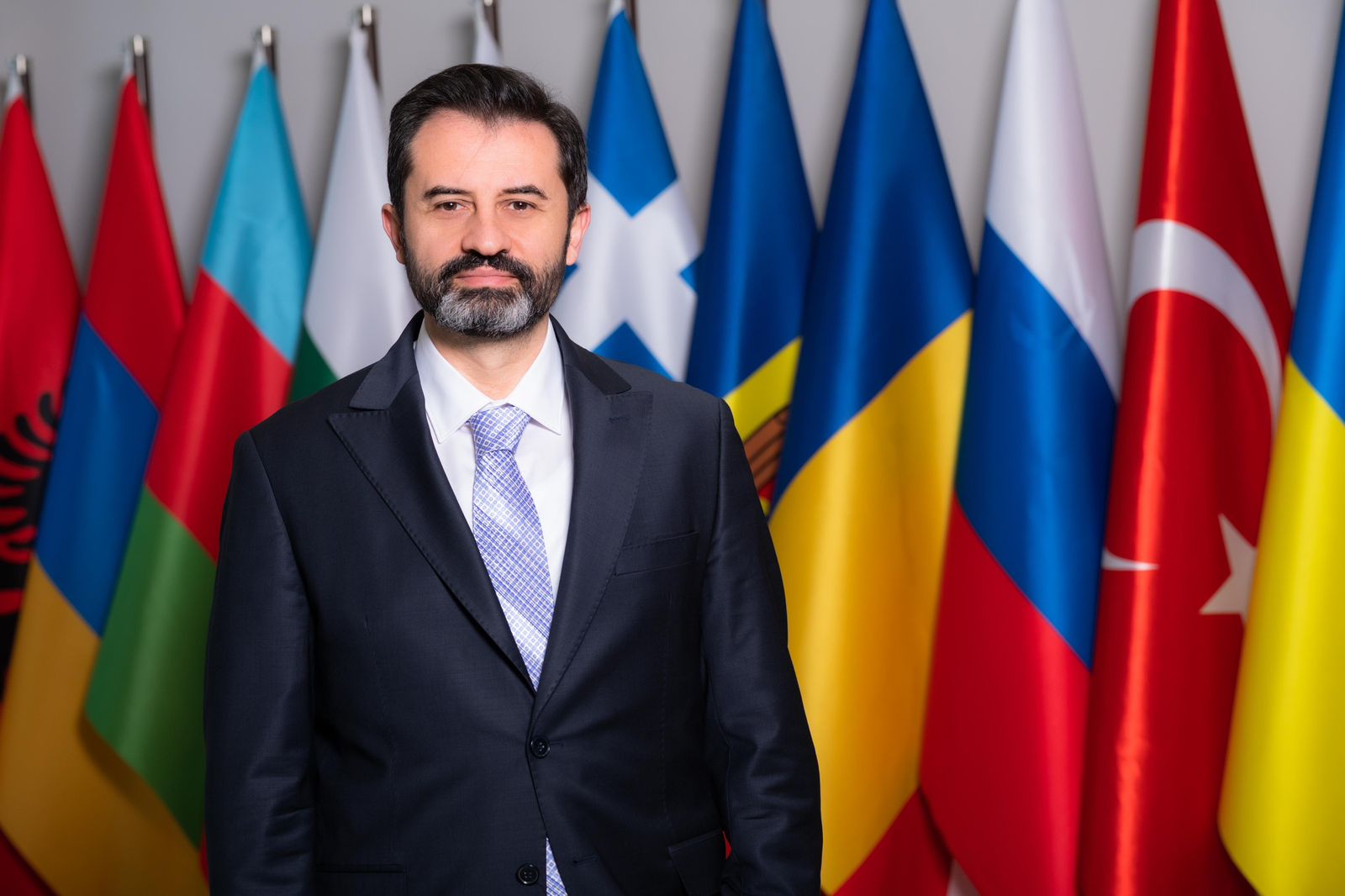
Dr. Serhat Köksal
President of BSTDB
Management
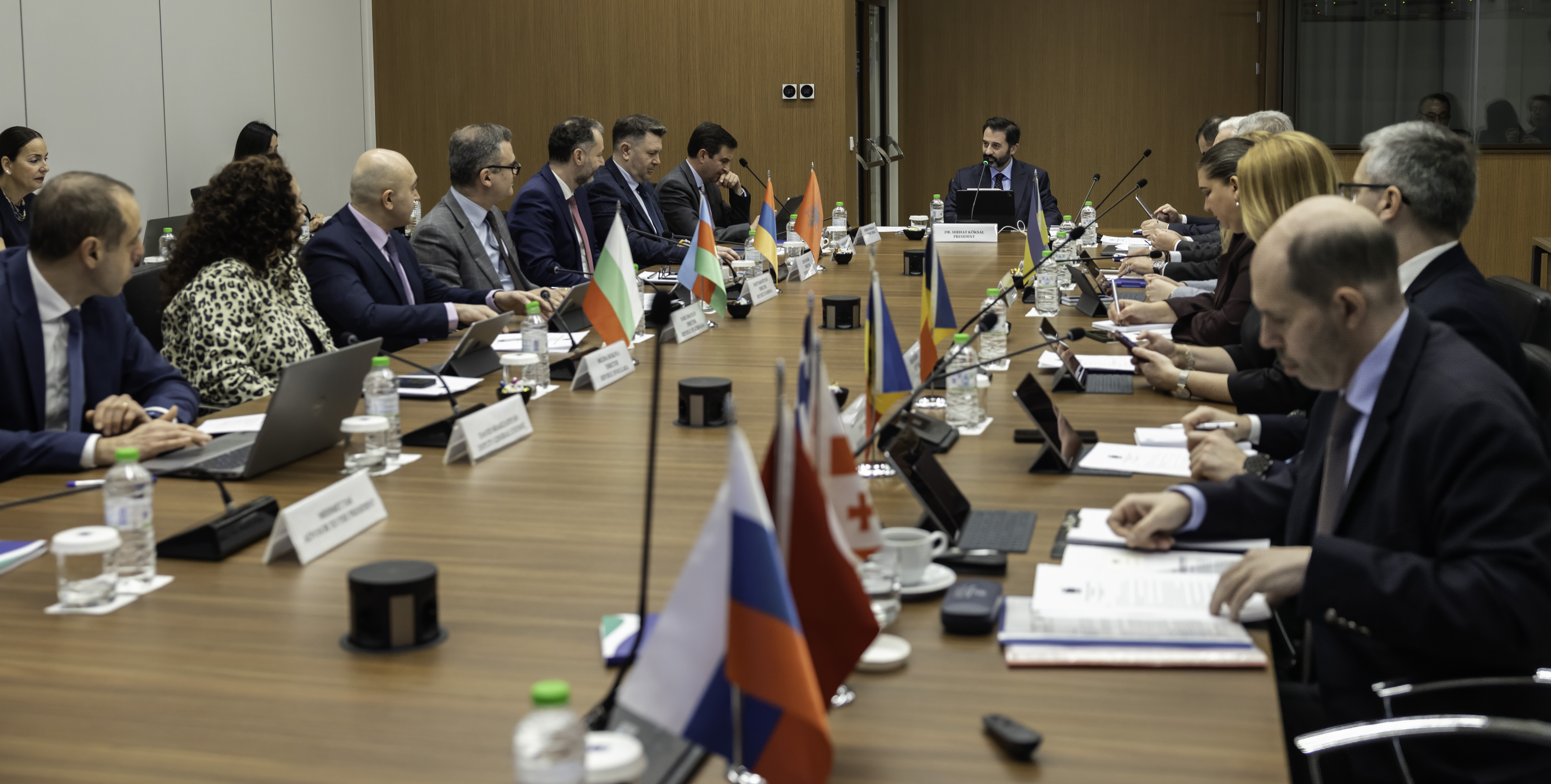
The Bank is structured in five Divisions. The President is the legal representative of the Bank and conducts the day-to-day business of the Bank under the strategic direction of the Board of Directors in conformity with the Articles of the Agreement Establishing the BSTDB. The Vice Presidents and the Secretary General are appointed by the Board of Directors and conduct their activity under delegated authority from the Board of Directors and the President. The President, the Vice Presidents and the Secretary General form the Management Committee and represent the senior management of the Bank.
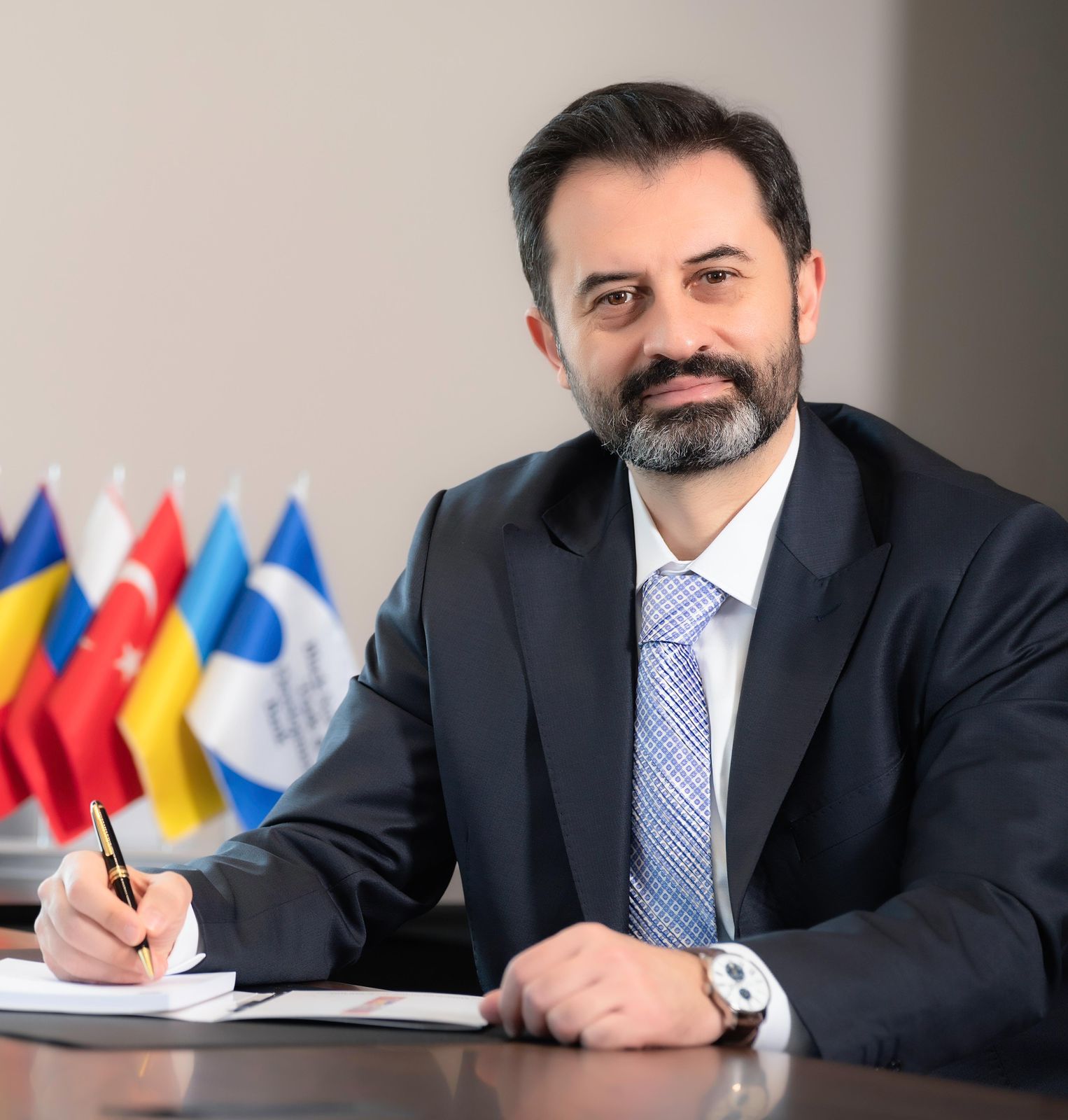
Dr. Serhat Köksal
President of BSTDB
Dr. Serhat Köksal assumed office as President of the Black Sea Trade and Development Bank (BSTDB) as of 16 July 2022.
Having started as an expert at the Turkish Statistical Institute, Dr. Köksal served for seven years as head auditor at the Turkish Court of Accounts, before becoming Deputy Secretary General of the Constitutional Court of Türkiye. In 2017, he joined the Ministry of Treasury and Finance as Deputy Director General of the Department of Foreign Economic Relations and became Director of the Department in August 2020 - a position he held until his appointment at BSTDB. Throughout his tenure at the Turkish Ministry of Finance and Treasury, he was mainly in charge of the country’s participation in international financial institutions, investment and financial relations and regional economic cooperation.
In 2020-2022, he represented Türkiye on the Board of Directors of the Black Sea Trade and Development Bank and the Council of Europe Development Bank.
During his career, Dr. Köksal has been actively involved in the implementation and supervision of public and critical infrastructure projects in Türkiye (hospitals, highways, power plants).
He has a Master of Business Administration from Middle East Technical University (Türkiye), a Master of Science in Accounting and Finance from the University of Warwick (UK) and a PhD in Accounting and Finance from Ankara University (Türkiye).
-
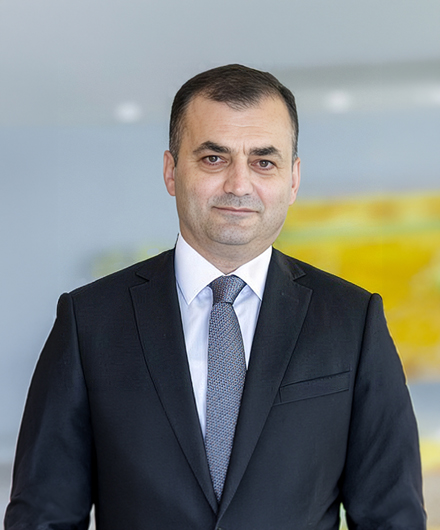 Ziya AliyevVice President Banking
 -
 Ivaylo MoskovskiVice President Finance
 -
 Dragoş Paul UngureanuVice President Risk
 -
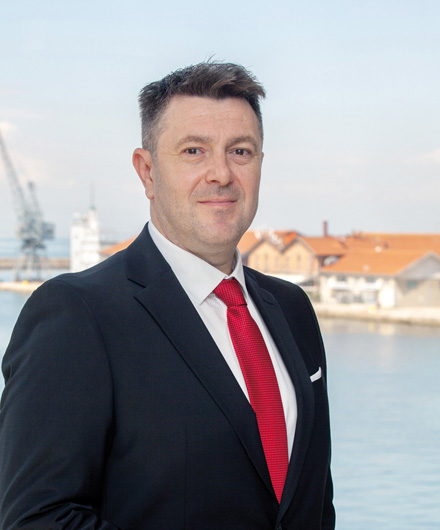
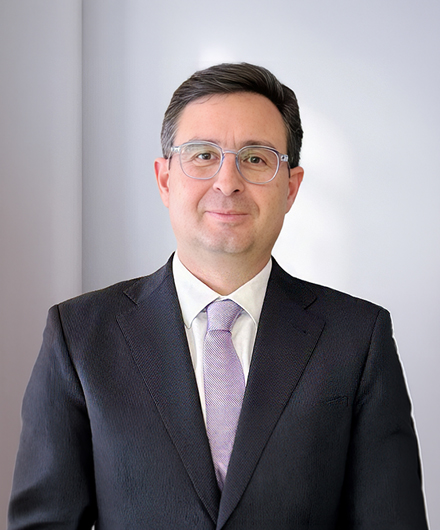 Asterios TsoukalasSecretary General
Azerbaijani, born in 1977
Mr. Ziya Aliyev assumed his duties as Vice President Banking of the Black Sea Trade and Development Bank on 8 May 2025.
Prior to joining BSTDB, Mr. Aliyev served as Advisor to the Governor at the Central Bank of the Republic of Azerbaijan, where he provided strategic advice on monetary and exchange rate policy, banking supervision, and capital market regulation. Having started his career at the Central Bank in 2000, he progressively advanced through senior roles in research, monetary policy, and strategic development. From 2013 to 2025, he held the position of Executive Director, overseeing critical departments including Insurance Supervision, Financial Consumer Protection, Strategic Management, and Risk Management.
Mr. Aliyev has also made notable contributions to Azerbaijan’s national development initiatives. He co-authored the Strategy for National Education Development, approved by the President of the Republic of Azerbaijan in 2013, and played a supportive role in preparing Azerbaijan 2030: National Priorities on Socio-Economic Development, a strategic policy framework adopted in 2021.
His contributions to the financial sector were acknowledged with the “Progress” Medal, awarded by the President of the Republic of Azerbaijan.
He has taught business development and strategic management courses at the Center for Banking Education (2019–2020), and previously lectured on development economics and strategic management at the Azerbaijan State Economic University and ADA University.
His academic background includes a Master of Arts in Policy Economics from the Center for Development Economics at Williams College (USA), and a Master and Bachelor of Science in Finance & Credit from the Azerbaijan State Economic University.
Mr. Aliyev is fluent in English, Azerbaijani, Russian and Turkish.
Mr. Ivaylo Moskovski was appointed Vice President Finance of the Black Sea Trade and Development Bank (BSTDB) on 16 September 2026.
From 2018 to 2022, he served as BSTDB Vice President Operations, overseeing risk management and environmental, social and governance matters.
Before returning to BSTDB, he served as Chairman of the Management Board and Executive Director of the Bulgarian Development Bank and as a Board member of the European Association of Public Banks.
His public-sector experience includes several terms as Bulgaria’s Minister of Transport, Information Technology and Communications between 2011 and 2018, service as Deputy Minister from 2009 to 2011, and leadership of the Managing Authority for the Operational Programme Transport.
He also served in the Bulgarian National Assembly, including on its transport and energy committees, and previously held management positions in private companies with Bulgarian and foreign shareholders.
Mr. Moskovski holds a Master’s degree in Financial Management and a Bachelor’s degree in Public Finance and speaks English, German and Russian.
Romanian, born in 1977.
Mr. Dragoş Paul Ungureanu was appointed Vice-President Risk of the Black Sea Trade and Development Bank as of 16 December 2022.
Dragoş Ungureanu joined BSTDB with extensive experience in the financial and banking sector. His most recent position was Head of Commercial SME and Microbusiness at Banca Transilvania, where he was in charge of the Bank’s loan policy and responsible for the implementation and successful delivery of government programmes. In a career spanning more than 17 years with Banca Transilvania, Mr. Ungureanu has a successful track record in portfolio acquisitions and migration processes, as well as promoting employee engagement and developing effective sales and product launch campaigns.
As the Vice President Risk, Mr. Ungureanu is in charge of the Bank's risk policy, project implementation and monitoring, environmental and social sustainability issues, as well financial analysis.
Mr. Ungureanu holds a Master’s in Public Sector Management from the National School of Political and Administrative Studies of Bucharest and a bachelor’s degree in Finance, Accounting and Informatics from the Oil and Gas University of Romania.
Mr. Asterios Tsoukalas was appointed Secretary General of the Black Sea Trade and Development Bank as of March 16, 2023.
Mr. Asterios Tsoukalas is a National of Greece, born in 1969. He holds a Master’s in Finance and Investments from the University of Exeter, UK and a B.Sc. in Economics from the Aristotle University of Thessaloniki, Greece. He has also received a Diploma in International Financial Reporting Standards (IFRS) by AIA as well as other certificates for investment services from the Hellenic Capital Market Commission (HCMC) and ADEX.
Prior to his appointment as Secretary General, Mr. Tsoukalas served for more than 16 years as the Head of the Hellenic Capital Market Commission (HCMC) at the Regional Office in Thessaloniki. He also served as a member of the Board of the Greek Anti-Money Laundering Authority. He has gained extensive experience in the financial sector throughout his career by having worked for 10 years in various investment services firms.
Mr. Tsoukalas served as Vice-President of the Board of Directors of HELEXPO S.A. and as a member of the company’s Audit Committee. Moreover, he was the Vice-Chairman of the Board of Trustees of Thessaloniki’s Concert Hall.
Mr. Tsoukalas was invited to speak at OECD and other institutional workshops on capital market and fraud topics as well as at seminars at Greek universities. He has presented scientific papers on finance at international conferences, and he has published articles in scientific journals. In honor of his Alma Mater, Mr. Tsoukalas served as President and Secretary General of the Board of Anatolia College Alumni Association as well as a member of the Governance Committee of the American College of Thessaloniki.
He is fluent in Greek, English and Spanish.
He is married and has two children.
Committees
Committees are hierarchically horizontal bodies of the Bank, mandated by the Board of Directors with specific decision-making authorities. The rights of the members of the Committees are defined in each Committee’s “Terms of Reference”. The Board of Governors on the recommendation of the Board of Directors has created the following committees with decision-making authority.
Management Committee
This is the main Committee of the Bank and has the mandate to consider and decide on all issues pertaining to key aspects of the Bank’s strategy, structure, operation, risk management and performance.
All other Committees established by the Bank have a subsidiary role and report to the Management Committee.
The Management Committee comprises the President as Chairman, the Vice Presidents and the Secretary General.
The Management Committee’s Secretary is a member of the staff nominated and appointed by the President.
The Management Committee makes all possible efforts to take its decisions unanimously, or, if consensus cannot be reached, there are special provisions regarding majority voting.
Credit Committee
The Credit Committee’s responsibility is to guide the Operation Teams through the approval process from Concept Clearance to Final Review, in conformity with the Bank’s Operations Cycle Policy and its attendant Operations Manual. It considers all matters related to the financing operations of the Bank and expresses opinions with respect to the appropriateness of the due diligence and appraisal process.
The Credit Committee rejects financing proposals that do not meet mandate/strategy criteria, are not economically/financially viable and sustainable, and/or are not in conformity with existing Bank regulatory framework.
Assets & Liabilities Committee
ALCO is responsible for setting strategic direction in asset and liability risk management and establishes specific numerical limits, targets, and guidelines within which tactical and operational ALM decision-making must take place. The Committee is responsible for decisions on issues concerning the relationship between the Bank’s assets and liabilities - capital adequacy, liquidity, foreign exchange risk, interest rate sensitivity and off-balance sheet risks.
Its composition is recommended by the President and approved by the BoD. It is the key institutional unit in the Bank’s financial management process.

Organizational structure
FAQ
Five main reasons should make a company in the Black Sea region prefer BSTDB: competitive financing, speed of decision-making, loan size, competence of the staff and absence of a "political agenda".
BSTDB provides financing on competitive terms, with additional benefits such as country risk mitigation, networking possibilities, improved access to additional resources, and, last but not least, knowledge of the region.
Though BSTDB follows international standards in its procedures, the Bank is smaller than other international financial institutions (IFIs) and thus, able to respond more quickly to a business proposal. While the approval of most projects takes around six months, BSTDB has been able to process and approve some financings in less than four months.
A third reason is that BSTDB is flexible, i.e. able to process projects, especially in its smaller member countries, under the 5 million USD limit applied by many other IFIs.
The fourth reason to undertake an operation with BSTDB is the high qualification of its staff. The project teams, staffed by professionals with extensive banking experience, blend international and local expertise and are closely involved with the Black Sea countries.
Finally, the Bank has no political agenda or political or macroeconomic policy conditions attached to operations. The Bank was created by the countries of the region to promote economic activity and regional cooperation.
BSTDB follows the general rules of international financial institutions in this respect. In general, and as a part of the negative list, the Bank cannot finance projects that are environmentally harmful and/or linked to the production of military equipment, narcotics, tobacco and products derived from hard alcohol. (However, BSTDB can finance the production of beer, wines and other products with a moderate alcoholic content). BSTDB's full Negative List of Products is available at www.bstdb.org.
There are two main limitations. BSTDB, like other international financial institutions, in principle does not finance more than 35% of the total project cost. The Bank also has a loan ceiling for each individual project (the single obligor limit), which is 7.5% of paid-in capital, reserves and surpluses for debt and 3% for equity, subject to periodic revision. As far as the lower limit is concerned, the BSTDB shows flexibility in meeting the demands of its clients in the region, many of them being small businesses. Therefore, the Bank may consider financing starting from a few million USD, which is a lower limit than that offered by other IFIs. Even smaller loans may be provided through cooperating financial intermediaries (local banks) in member countries.
BSTDB follows internationally accepted standards in its project cycle. After a project proposal is presented to the Bank and initially screened, the concept is cleared by the Bank’s Credit Committee. Then, after appraisal and due diligence, the Credit Committee undertakes Final Review and, if approved, sends the operation for final approval to the Board of Directors. Once this approval is obtained, the loan agreement can be signed, followed by the disbursement of the loan. The same approval procedure applies for credit lines to financial intermediaries.
BSTDB proceeds as quickly as possible, depending on the quality of information obtained from the client, the capacity of the client, the complexity of the project itself and the risk involved. In general, the Bank aims for 3-6 months. However, the Bank will not proceed with financing until it is completely satisfied with all appropriate information and the legal documentation is fully verified.
The pricing and the terms of a loan are subject to individual appraisal. As with other institutions, pricing of an operation depends upon the cost of funds, a margin to cover costs, and a risk margin. As for fees and commissions, the Bank normally requires a front-end fee and a commitment fee. Following international practices, BSTDB may also request other fees depending on circumstances, such as an appraisal fee, a syndication fee, a management fee, etc.
A standard commercial security package, including - but not limited to - a pledge of shares, assets, bank accounts, etc., is generally required, while the Bank may also accept an offshore security. For certain short-term and low risk transactions, financing may be provided unsecured, but this is an exception, not a rule. The Bank does not normally seek a sovereign guarantee, but certain projects - particularly where state-owned entities or official agencies are involved and the nature of the operation may generate general economic benefits but not a direct financial return - may require such a guarantee.